US Dollar

Top 5 Questions About Utility Marking Flags
TLDR: Utility marking flags are essential for identifying underground utilities and keeping worksites safe. Understanding color codes, following safety guidelines, and using custom flags when needed helps prevent damage, delays, and costly mistakes.
Key Takeaways:
Utility flag colors communicate critical information about what’s below the surface and help prevent accidental damage.
Flags should never be ignored or removed prematurely, as they play a key role in jobsite safety.
Most marking flags are temporary, but they’re essential throughout active construction or excavation.
Custom marking flags provide clarity when standard options fall short, especially for specialized projects or unique site needs.
Utility marking flags play a crucial role in construction and excavation projects, serving as visual indicators of the presence of underground utilities. These flags come in various colors, each representing a specific type of utility.
Below, we delve into the meanings behind different utility flag colors, safety considerations, and the significance of custom marking flags in fostering safe and efficient work sites.
1. Why are there utility marking flags in my yard?
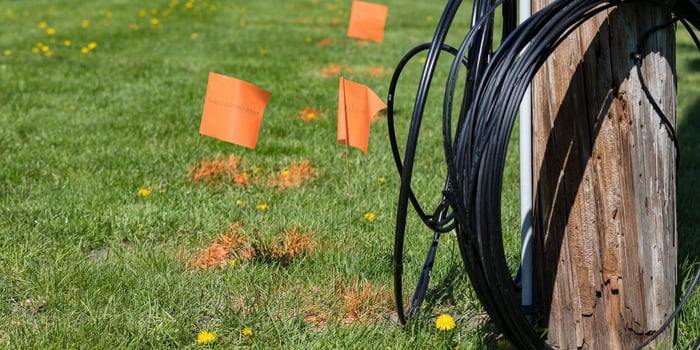
If you notice a sudden appearance of small, colored flags in your yard, do not be alarmed. Their presence is likely due to upcoming construction or excavation work in the area.
These yard marking flags serve as warnings to contractors and homeowners about the presence of underground utilities, preventing accidental damage and ensuring a safe working environment.
The rainbow in your grass might be a bit confusing, so here’s our guide to utility flag color meanings, based on the APWA uniform color code:

What do white utility flags mean?
White utility flags typically indicate proposed excavation areas. Contractors use them to outline the boundaries of planned digging, providing a visual reference for the project’s scope.
What do blue utility flags mean?
A blue flag serves as a waterline marker, signifying the presence of portable water lines. If you see blue pipeline flags in your yard, it indicates that there are water pipes beneath the surface.
What do yellow utility flags mean?
Yellow utility flags serve as gas line markers, associated with gas, oil, steam, or petroleum lines. These flags serve as a warning to prevent accidental damage to these crucial pipelines.
What do red utility flags mean?
Red utility flags are used to mark electric power lines, cables, conduit and lighting cables.
What do orange utility flags mean?
Orange construction flags designate the presence of communication, alarm, or signal lines. These may include cables for telephone, internet, or other communication services.
What do green utility flags mean?
Green utility flags indicate the location of sewer and drain lines. Identifying these areas is essential to prevent contamination and ensure proper maintenance of sewage systems.
What are pink utility flags?
Pink utility flags are temporary survey markings, providing information related to surveying activities.
Not all marking flags follow this color code. Irrigation and lawn contractors often use a separate set of flags to mark heads, valves, and zones on a job, and choosing the right one comes down to a different set of factors like durability and staff type rather than utility type.
2. Are there any safety considerations when dealing with utility marking flags?
Utility marking flags are used to help you stay safe. Always exercise caution around flagged areas, avoid removing the markers, and do not dig or excavate without proper authorization.
Adhering to the utility flag color code helps prevent accidents and ensures the safety of both workers and the community.
3. How long is it advisable to keep marking flags in place?
Underground utility markers are typically temporary, serving their purpose during construction or excavation projects. It is advisable to remove them once the work is complete to avoid confusion. However, local regulations may provide specific guidelines on the duration flags should remain in place.
4. What should someone do if they come across damaged or missing utility marking flags?
If you notice damaged or missing utility marking flags, it’s essential to report it immediately. Contact the local utility company or relevant authorities to ensure that the information is updated promptly.
This helps maintain the accuracy of the pipeline markers and prevents potential accidents.
5. In what situations are custom marking flags typically used?
Custom marking flags are ideal for projects where standard color codes don’t quite fit. They’re commonly used for specialized applications, industry-specific needs, or situations that call for clearer identification or branding on-site.
When off-the-shelf options aren’t enough, Blackburn makes it easy to create custom marking flags designed to meet your exact requirements—without sacrificing durability, visibility, or turnaround time.
Mark With Confidence
Utility marking flags may be small, but their impact on safety, efficiency, and compliance is significant. From understanding standard color codes to knowing when a custom solution makes more sense, the right flags help crews work smarter and avoid unnecessary risk.
Blackburn has sold over 6,681,445,656 flags since 1979. With an average order turnaround time of 7-10 days, we make it easy to get dependable, high-visibility marking flags—whether you need standard options or custom designs tailored to your project.
Explore all Blackburn marking flags.