US Dollar
How to Choose Irrigation and Lawn Marking Flags
TLDR: Choosing the right irrigation or lawn marking flag comes down to matching the material, size, and staff type to how long the job needs to last. Vinyl flags work well for short-term marks and locates, while high-gloss poly holds up for a full service season. Size should scale with grass height, and fiberglass staff is worth the extra cost on jobs with heavy mowing or vehicle traffic. Blackburn manufactures all of these flag types in the USA and offers custom printing for crews that want their company name visible on every flag in the ground.
Key Takeaways:
Flag material determines field life. Vinyl lasts around three months, high-gloss poly lasts three to six months, and coroplast signage lasts six months to a year, but it is built for posting rather than point marking.
Size should match grass height and marking density. Smaller flags work for dense residential marking, the 4" x 5" size handles most standard jobs, and the 5" x 6" or 5" x 8" sizes give better visibility in tall turf.
Staff type matters as much as the flag itself. Fiberglass staff resists bending under repeated mowing or vehicle contact, which keeps flags standing and visible for the length of the job.
Custom printed flags and supplementary tools like whiskers and irrigation tags add value beyond basic marking. Blackburn ships custom orders in 7 to 10 days, so ordering ahead of the spring rush keeps crews stocked before the busiest season hits.
Most irrigation and lawn marking jobs come down to three choices: vinyl for short-term marks, high-gloss poly for anything that needs to survive a full service season, and fiberglass staff flags for spots that get mowed around or driven past.
The question to ask before you order irrigation flags or landscape flags is simple: how long does this flag need to stay standing? Answer that first, and the rest of the decision (material, size, and staff type) falls into place.
Here’s what to know.
Start With One Question: How Long Does the Flag Need to Last?
Before you compare colors or prices, figure out the job's timeline. Every marking job on a property typically falls into one of three categories, and each one points to a different flag.
If you are marking a repair or a locate you will return to within days, grab the shortest-lived, least expensive flag on the shelf. There is no reason to pay for durability you will not use.
If you are marking heads and valves for a full service season, you need yard marker flags built to survive months of sun, mowing crews, and foot traffic without fading or snapping.
And if the flags will get mowed around, trimmed near, or driven past regularly, staff strength matters as much as, if not more than, the flag material itself. A flag that survives the season does no good if the staff bends flat after the first pass with a mower.
Field Life by Flag Type
Flag material plays a major role in how long lawn flag markers hold up outdoors, and the differences matter. These figures come from Blackburn's own field data, tracked across real jobsite conditions.
| Flag Type | Typical Field Life | Best For |
|---|---|---|
| Vinyl | 3 months | Short-term marks, repairs, locates, high-volume seasonal work |
| High-gloss poly | 3 - 6 months | Full-season marking, heads and valves, higher-visibility jobs |
| Coroplast (signs) | 6 months - 1 year | Notification and posting, not point marking |
A thinner vinyl flag takes UV exposure hard and starts to fade and curl within a season, while the heavier gloss coating on plain, printed, or custom poly flags resists that breakdown and holds color longer.
Coroplast is a different animal altogether. It is built for signage and posting, not for point marking, so it is not a fit for lawn marking flags used to flag a valve or a head. For irrigation marking flags specifically, poly is usually the better investment once a job runs past the first month.
Sizes, and When the Bigger Flag Is Worth It
Blackburn stocks five main sizes: 2" x 3", 2.5" x 3.5", 4" x 5", 5" x 6", and 5" x 8". The right one for your jobsite depends on how tall the grass is and how many marks you are placing.
The 2" x 3" and 2.5" x 3.5" sizes work best for dense marking in tight residential zones, where you need a high count of yard flags for marking without cluttering a small yard.
The 4" x 5" flag is the default working size for most irrigation and lawn jobs. It is visible enough for a walkthrough or a follow-up crew but does not overwhelm a typical residential or light commercial property.
The 5" x 6" and 5" x 8" sizes earn their place on jobs with tall turf or long sightlines. If a mower crew needs to spot a lawn marker flag from a distance before they get close enough to run it over, the bigger flag buys them that extra second of warning.
Tie the size choice to grass height on the property: taller grass swallows small flags fast, so the extra visibility of a 5" x 6" or 5" x 8" flag is worth the cost on any lot that gets mowed on a loose schedule.
Browse the full lineup of Blackburn’s marking flags category, including plain vinyl 2.5" x 3.5" flags, plain vinyl 4" x 5" flags, and plain vinyl 5" x 8" flags.
Wire Staff vs. Fiberglass Staff
Standard wire staff handles general marking just fine. It is inexpensive, easy to plant, and does the job on short-term marks and locates that a crew will pull within days. Fiberglass staff flags earn their cost on jobs where flags take repeated contact or need to stand straighter for longer.
Wire staffs bend after a mower deck brushes them a few times, and once they bend, lawn marker flags lie flat in the grass where nobody sees them. That means a crew has to walk the property again and replace markers mid-job, which costs more time than the fiberglass staff would have cost up front.
If a job runs a full season or sits anywhere near regular mowing, trimming, or vehicle traffic, spend the extra on fiberglass staff flags and skip the mid-job replacement trip.
Solid, Patterned, or Printed
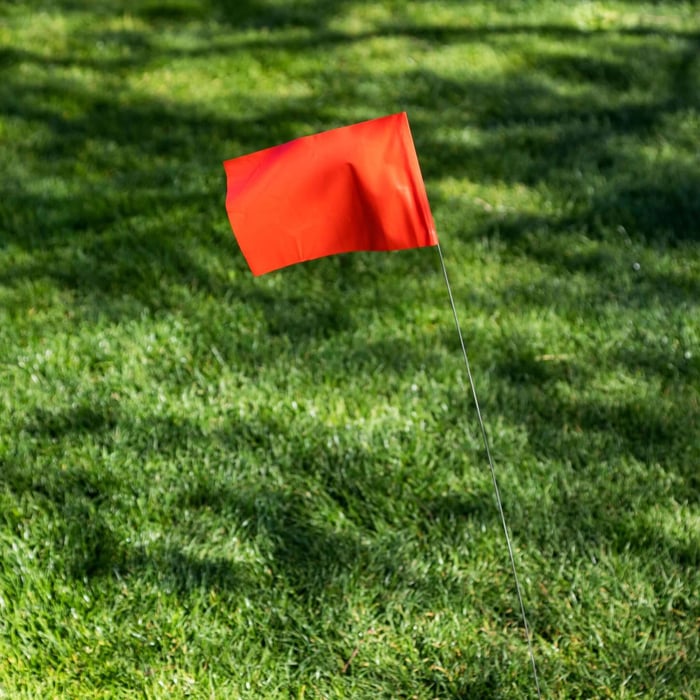
Solid color, or plain vinyl marking flags, are the working default, and most landscape marking flags on a jobsite should probably stay solid unless there is a reason to change.
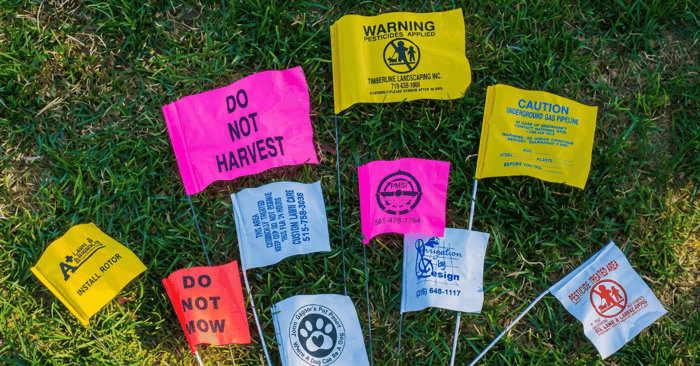
Patterned flags solve a problem most buyers do not think about until they hit it: distinguishing your marks from a utility crew’s marks on a shared site.
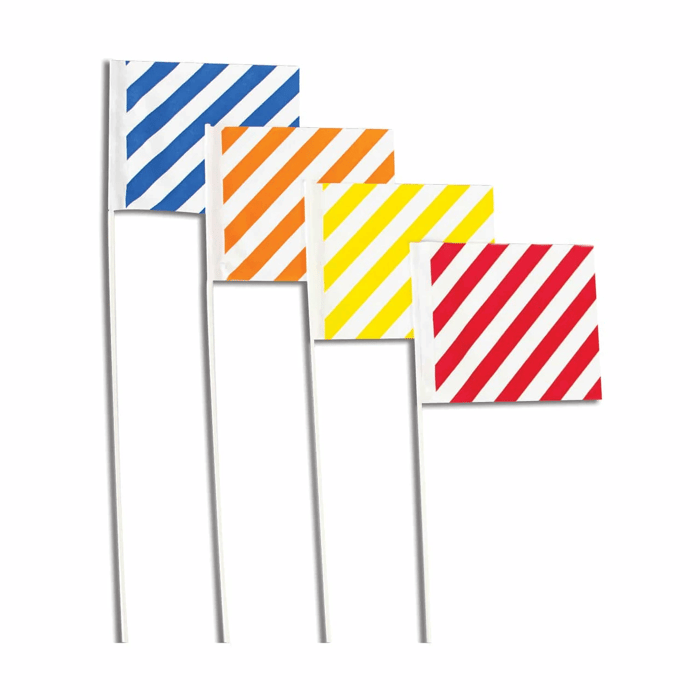
When a gas locate crew and an irrigation crew both flag the same yard in the same week, solid flags in similar colors get confused. A patterned flag makes your marks instantly recognizable as yours, which saves the guesswork and the time spent on phone calls.
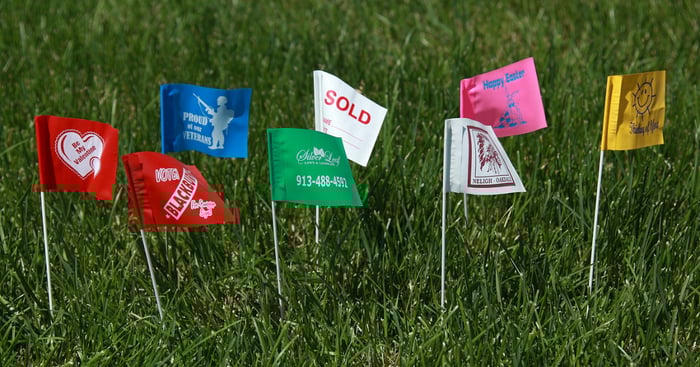
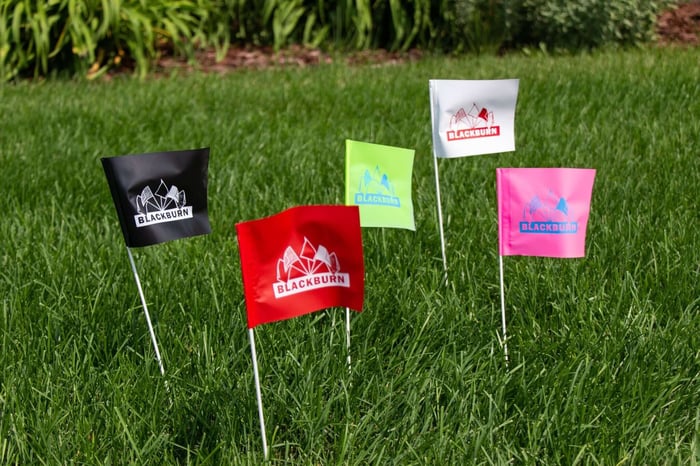
Custom printed flags carry your company name, logo, and phone number on every flag in the ground. That flag can sit in a customer's lawn for weeks, visible from the street to anyone who walks or drives by. Custom lawn flags are free advertising for the length of the job.
Matching Flags to the Job
Here is how the decision plays out on four jobs a crew runs regularly.
Marking heads and valves before a landscape crew works a property.
Landscaping flags need to survive the length of the service visit and possibly longer if the crew returns for follow-up work. High-gloss poly flags in the 4" x 5" size hold up through repeated mowing and trimming without fading, and it stands out enough for the crew to spot on approach.
Flagging a system for a repair the crew returns to next week.
This is a short window, so there is no reason to spend on poly or fiberglass. Vinyl lawn flags on standard wire staffs, sized 2.5" x 3.5" or 4" x 5" depending on how many marks are needed, get the job done and get pulled within days.
Marking zones on a new install for the walkthrough.
Walkthroughs often involve multiple stakeholders walking a property at once, so visibility matters more than durability. A 5" x 8" flag, possibly patterned to separate zones or stages, keeps everyone on the same page without confusion.
Lawn treatment application marking.
Lawn treatment flags need to survive outdoor exposure long enough to satisfy posting requirements and give homeowners, pets, and crews a clear warning. A poly flag on standard staff, placed at property entry points and treated zones, covers most residential lawn treatment jobs.
Whatever the scenario, matching the flag to the job instead of grabbing whatever is on the shelf is what separates a crew that reorders once a season from one that reorders every few weeks.
Ordering in Bulk and Lead Time
Blackburn ships custom orders in 7 to 10 days, with 95% of orders shipped on time.
Spring is the industry's heaviest ordering window, so if a season is coming up that will need custom irrigation flags, custom landscape flags, or custom sprinkler flags, place that order ahead of the rush rather than waiting until the first jobs of the year land on the schedule.
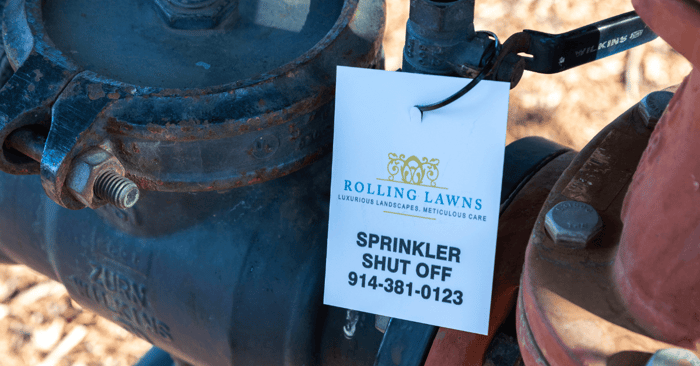
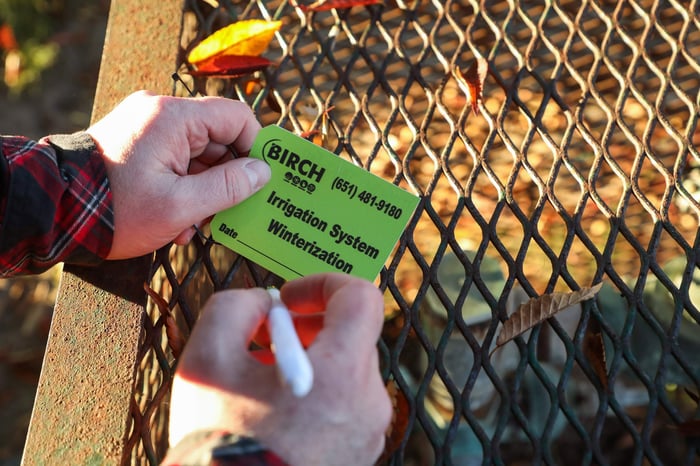
It is worth stocking up on more than flags at the same time. Whiskers give crews a low-profile way to flag buried lines or edges where a full flag is not practical, and irrigation tags make it easy to label heads, valves, and zones for the season.
Both are good supplementary tools to keep on hand, and both are available in bulk alongside your flag order.
Choose the Right Flag for Your Job
Vinyl, poly, or fiberglass. Small flag or large. Solid, patterned, or printed with your company name.
None of these are hard decisions once you know how long your yard marking flags need to hold up and what conditions they have to survive. Match the flag to the job, and you spend less time replacing markers mid-project and more time getting the work done.
If you are still weighing options for an upcoming job, or you know exactly what you need and want it printed with your company's name and number, request a custom quote and Blackburn will help you land on the right combination of material, size, and staff.
Not ready to customize yet? Browse the full marking flags category to see everything in stock.
FAQs
How long do irrigation flags last?
Field life depends on material. Vinyl flags typically last around 3 months outdoors. High-gloss poly flags last 3 to 6 months. Both figures assume normal outdoor exposure, including sun, rain, and mowing traffic.
What size marking flag is best for tall grass?
The 5" x 8" size gives the most visibility in tall turf. Anything smaller risks getting swallowed by grass height before a mower crew or a follow-up team spots it.
Can I get marking flags printed with my company name?
Yes. Custom printed marking flags for yard use can be printed with your company name, logo, and phone number, which keeps the business visible on the property for as long as the flag stays in the ground.
What's the difference between vinyl and poly marking flags?
Vinyl is lighter and less expensive, and it suits short-term marks and locates. High-gloss poly carries a heavier coating that resists UV fading and holds up for a full service season, which makes it the better fit for yard flags for marking used over longer stretches.
How many marking flags do I need per irrigation job?
It depends on the property size and how many heads, valves, or zones need marking. Dense residential zones often call for smaller flags in higher counts, while larger properties may need fewer, larger flags spaced further apart.
Are marking flags reusable?
Generally no. Marking flags are built for a single job cycle. Once pulled, the staff or flag often bends or the material starts to show wear, so most crews treat them as a consumable rather than reusing them job to job.
Related Links
This post was prepared by the marketing team at Blackburn Manufacturing Co., a marking flag manufacturer based in the USA since 1953. Blackburn produces vinyl, poly, and custom printed marking flags, tags, and accessories for irrigation, landscape, utility, and survey professionals across the country.