US Dollar
What Makes High-Quality Marking Flags Different
TLDR: Not all marking flags perform the same once they hit the jobsite. Material quality, color consistency, staff durability, and printing methods all impact visibility, safety, and efficiency over time. Choosing a manufacturer, like Blackburn, that offers a full, compatible flagging system with high-quality custom printing.
Key Takeaways:
Jobsite conditions should drive your flag choice. Soil type, weather exposure, and project duration determine what flag material and staff options make the most sense.
A complete flagging system improves efficiency. Sourcing plain, patterned, banner-style, custom flags, insertion tools, and marking tapes from one manufacturer ensures compatibility and consistent performance.
Material quality directly impacts visibility and longevity. Strong color retention, weather resistance, and durable staffs prevent fading, bending, and unnecessary replacement.
Digital press custom printing adds lasting clarity. High-quality printing resists smearing and fading, keeping logos, warnings, and project identifiers legible throughout the life of the project.
When crews head to a jobsite, they bring equipment they trust.
Excavators, locators, GPS units, trenchers. Every tool plays a role in accuracy and safety. Yet one of the most frequently used tools on any site often receives the least scrutiny: the marking flag.
At first glance, most marking flags look similar: bright color, thin staff, small piece of vinyl or poly. But once they are installed and exposed to weather, traffic, and time, the differences become obvious.
Color fades. Staffs bend. Material tears. And suddenly, a small product becomes a weak link in the workflow.
This guide breaks down what separates a great marking flag from lower-grade alternatives and why those differences matter to the professionals who use them every day.
Who Uses Marking Flags?
Marking products exist to support crews who work in unpredictable environments and depend on visual communication to stay safe and efficient.
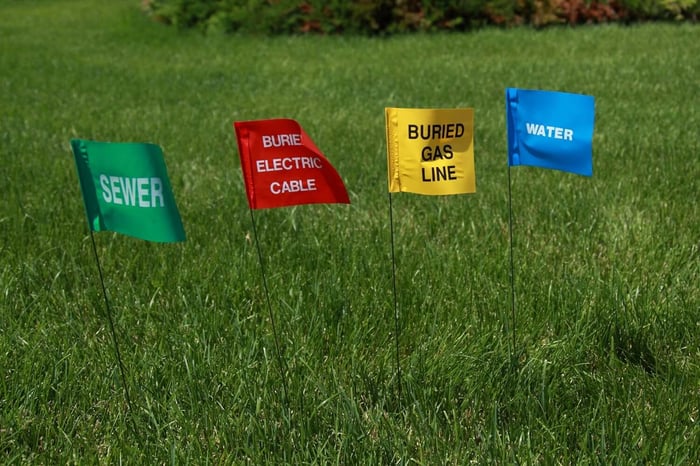
Utility contractors rely on utility marking flags to identify gas, electric, telecom, and water lines before excavation begins. Survey teams use surveying flags to define boundaries, elevations, and reference points.
Construction crews place marker flags to outline dig zones and staging areas. Landscapers and irrigation installers depend on visible utility markers to track valves, pipe runs, and layout lines.
Municipal departments use them to protect public infrastructure during maintenance and expansion projects.
Each of these professionals operates under tight timelines and high accountability. When a mark becomes unclear, the delay is not theoretical: crews recheck, supervisors confirm, and equipment waits.
Quality in markers is not just about appearance. It is about maintaining clarity throughout the life of the project.
Where Lower-Quality Flags Fall Short
Many low-cost products perform well for a day or two, which makes them easy to justify on paper. The problems appear over time:
Lower-grade flag materials often lack UV resistance, causing colors to fade faster than expected.
Thin vinyl tears in wind, especially in open right-of-way conditions.
Lightweight poly curls under prolonged heat.
Weak wire staffs bend in compact soil and rarely return to shape.
Printed notes smear or degrade when exposed to moisture.
Individually, these issues seem minor. Collectively, they create confusion.
A faded red does not communicate the same urgency as a bold one. A bent staff reduces visibility from a distance. A torn flag forces crews to question whether the mark still reflects current information.
Blackburn builds its utility flags to avoid these failure points. Material thickness, color consistency, and staff integrity are engineered for longevity, not just initial placement.
What Matters Most in Flags Used on Active Jobsites
Field conditions are rarely controlled. Soil density shifts from loose sand to compact clay. Weather moves from heat to freezing temperatures in the span of a season. Heavy equipment travels through marked areas.
Some projects extend for months, requiring markers that remain visible long after installation.
High-quality survey flags must account for:
High winds across open right-of-ways
Extended UV exposure
Mud, moisture, and heavy rain
Frozen ground during winter repairs
Repeated handling by multiple crews
That durability becomes especially important in long-term infrastructure projects where crews return to the same site weeks later and depend on previously placed indicators.
Blackburn designs products to maintain flexibility in cold conditions and structural integrity in heat. Staff options, including fiberglass, provide additional resilience in tough soil. The result is fewer replacements and less uncertainty about whether the original mark still communicates clearly.
Why USA-Made is Best
Manufacturing location directly influences consistency. Domestic production allows tighter control over materials, color accuracy, and printing processes, while also supporting faster turnaround times for custom orders.
Blackburn produces marking products in the United States, maintaining oversight from raw material selection to final assembly. That level of control becomes even more important when color coding and wording must align with industry standards and compliance expectations.
The production numbers illustrate sustained demand for USA-made utility flag markers from professionals who reorder year after year. In 2025 alone, Blackburn sold:
177,742,800 vinyl flags
682,000 fiberglass flags
3,110,800 poly flags
Annual production exceeds 191 million vinyl flags and 5 million poly flags, and since 1979, more than 6,681,445,656 flags have been sold.
That volume does not happen without repeat customers.
Build a Complete Flagging System
Different jobs require different types of flags, and the smartest approach is to source them from a manufacturer that understands how they work together.
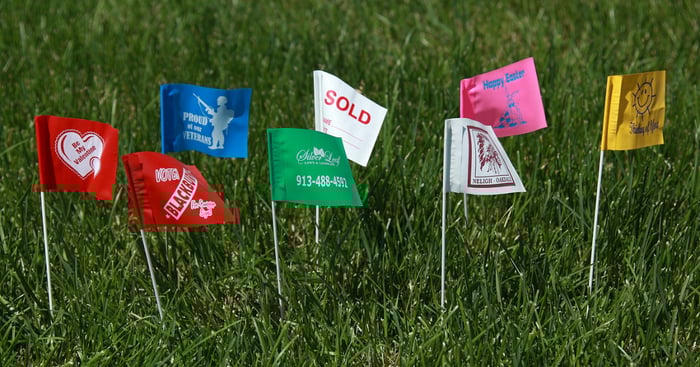
Survey crews, utility contractors, construction teams, and irrigation installers often use multiple flag styles on the same project. Plain marking flags may define general layout, patterned marking flags can differentiate phases or subcontractors, and banner-style flags provide added visibility in high-traffic areas.
When those products come from the same manufacturer, color consistency improves, material quality stays aligned, and performance remains predictable across applications. That consistency becomes especially important on larger jobs where multiple crews rely on the same visual language.
Material choice also plays a role. Vinyl offers durability and strong color retention for most environments, while poly provides high-gloss visibility and weather resistance. Poly works particularly well for extended winter use or irrigation projects where moisture exposure is common.
A comprehensive system should also include the accessories that support efficient installation. Flag insertion tools help crews place flags quickly and consistently, especially in compact soil. Marking tapes complement stake placement by creating visible boundaries across longer spans.
When flags, tapes, and tools are designed to work together, crews move faster and reduce breakage or improper placement.
Blackburn offers high-quality selections of:
Poly and vinyl material options
What Makes a High-Quality Custom Flag
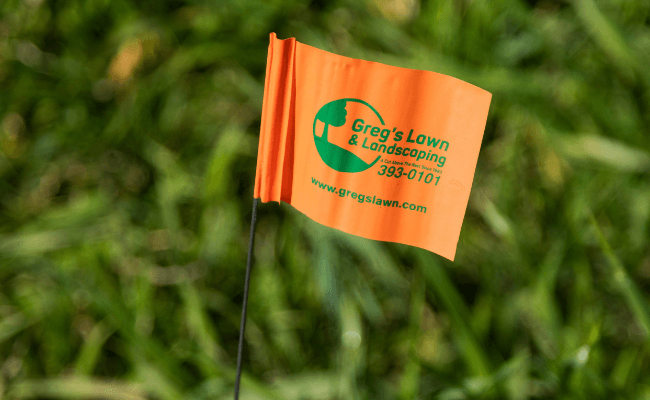
Custom printing turns a simple marker into a communication tool. Company identification, warning messages, project codes, and utility designations all reduce confusion, increase accountability, and improve brand awareness.
The printing method determines whether that information remains legible once exposed to weather and other elements.
Digital press printing produces sharper detail, stronger ink adhesion, and more consistent color application than basic stamping or lower-grade methods. It allows for precise logos, clean typography, and multi-color designs.
Blackburn uses digital press printing for their custom marking flags, which gives customers speed and flexibility without sacrificing quality.
It’s a smart option for shorter runs, faster turnarounds, and designs that may change over time, like updated messaging, seasonal promotions, or repeat orders that don’t need new screens.
Digital printing also supports customization at scale, making it easier to fine-tune designs and move projects forward efficiently.
Choose Flags That Work as Hard as Your Crew
When crews head to a site, they expect their tools to perform. Flags should not be the weak link.
When evaluating options, consider more than price per unit. Assess material durability, color consistency, printing quality, and manufacturing control.
Blackburn’s decades of production, extensive annual output, and continued demand from utility, construction, and survey professionals indicate sustained reliability. From high-volume stake flags to branded solutions, quality remains the focus.
If your projects demand clarity and performance, choose marking systems designed for real-world conditions. Explore Blackburn’s full line of marking flags or connect with our team to discuss custom orders and bulk pricing options.
FAQs
What makes marking flags different between manufacturers?
Differences typically involve material thickness, UV resistance, color accuracy, staff durability, and print quality. Higher-grade materials and controlled manufacturing processes result in longer field life.
Are Blackburn marking flags made in the USA?
Yes. Our domestic manufacturing supports consistent material sourcing, quality control, and faster custom production timelines.
What are underground utility markers used for?
Underground utility markers identify buried infrastructure such as gas, electric, water, sewer, and telecom lines to reduce the risk of accidental damage during excavation.
Can contractors order custom printed flags?
Yes. Custom options allow contractors and municipalities to add logos, warning language, or project identifiers directly to flags for improved communication and branding.
How long do survey flags last outdoors?
Survey flagging longevity depends on material choice and environmental conditions, but high-quality vinyl and poly flags can remain visible and flexible for extended periods under UV exposure and weather stress.
Do larger Blackburn flag orders qualify for freight discounts?
Yes. Orders weighing 125 lbs. or more qualify for multi-weight freight discounts, allowing Blackburn to reduce overall shipping costs and pass those savings directly on to customers.