US Dollar
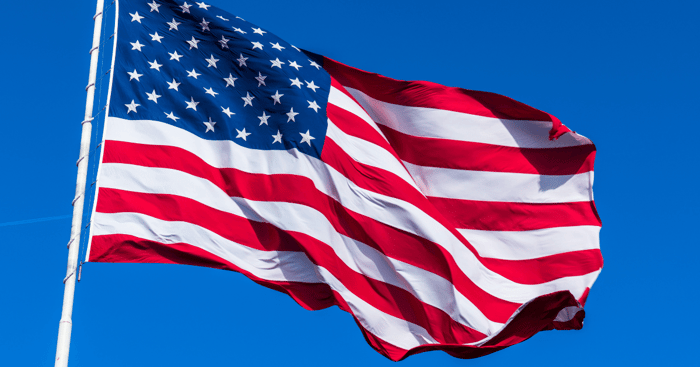
Marking the Next 250 Years: How Flags Guide the Work Ahead
TLDR: Flags have always helped people understand where they are and what comes next. 250 years later, that role still holds, just in a more practical setting. From early American symbolism to today’s job sites, marking flags continue to guide, protect, and keep projects moving with clarity and confidence.
At a Glance:
The core purpose of flags has stayed the same over 250 years. They signal information, create clarity, and help people move forward safely.
Modern marking flags play a critical role on job sites by identifying utilities, defining boundaries, and preventing costly mistakes.
Material choice matters. Poly, vinyl, and American poly flags each serve different needs depending on environment, visibility, and duration.
Blackburn marking flags are built for durability and consistency, helping crews rely on clear, visible markers that keep projects running smoothly.
In 2026, the American flag turns 250. That is 250 years of standing tall, showing up, and signaling something that matters.
A lot has changed since then. The role of a flag has not.
Flags have always helped people understand where they are, what is happening, and what to do next. That still holds true today.
Same Idea, Different Ground
Two hundred and fifty years ago, flags served a clear role. They marked land, claimed territory, and signaled allegiance. In uncertain environments, they told people where they stood and whether they were safe.
That same core function still exists.
Marking flags guide crews through complex environments. They identify underground utilities, outline excavation zones, and help teams avoid costly and dangerous mistakes. When a crew sees a line of flags, they know where to dig, where to stop, and where to proceed with caution.
Instead of marking new land for a growing nation, today’s flags help build that nation’s infrastructure. Roads, power lines, water systems, and communication networks all rely on clear visual communication. Marking flags make that possible.
You can walk onto a job site and understand a lot just by looking down.
Hand-Sewn Beginnings, Precision Manufacturing Today
The origin story of the American flag often points to Betsy Ross, sewing stars and stripes by hand. Whether the details are myth or fact, the image sticks because it represents craftsmanship, care, and pride in the final product.
That spirit still shows up today, just with better tools and materials.
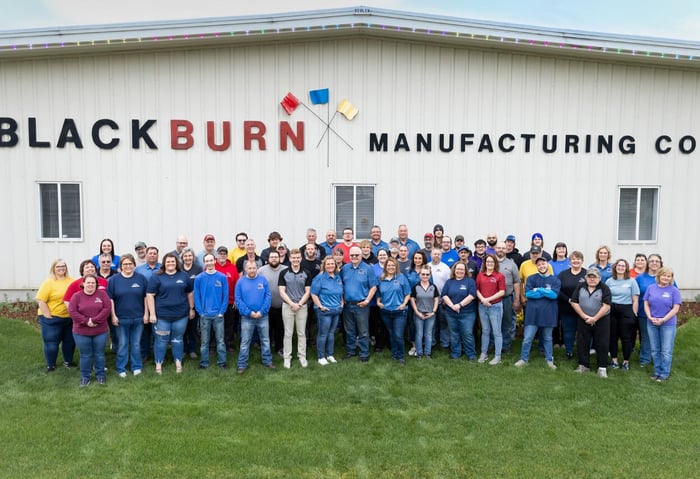
At Blackburn, flags are built with intention, for consistency. We know that every flag needs to look right, hold up, and do its job without question. Manufactured in the United States and backed by a family owned and operated business, Blackburn flags reflect a commitment to quality that mirrors the pride behind the USA’s original.
Where early flags relied on hand stitching, today’s marking flags use a range of durable materials, consistent sizing, and reliable assembly processes. Every flag needs to perform the same way every time. Crews depend on that consistency to do their jobs safely and efficiently.
The craftsmanship has evolved, but the mindset has not.
“Still There” Then and Now
One of the most powerful lines in American history comes from the national anthem: after a night of uncertainty, was the flag still there?
On job sites, flags face wind, rain, heat, and constant exposure. If a flag disappears or fails, it creates confusion. That confusion can lead to delays, rework, or worse.
Blackburn flags are designed to stay visible and stay put. Durable poly materials resist tearing. Bright colors maintain visibility in changing conditions. Strong staff construction ensures flags remain upright even in tough environments.
The goal is simple. When crews return to a site, the markers are still there.
Red, White, and Blue and Every Color in Between
Red, white, and blue carry meaning everyone recognizes. On job sites, color still does the heavy lifting. There are just more of them, and each one tells a very specific story.
Red for electric. Yellow for gas. Blue for water. Orange for communication. Green for sewer. White for proposed work.
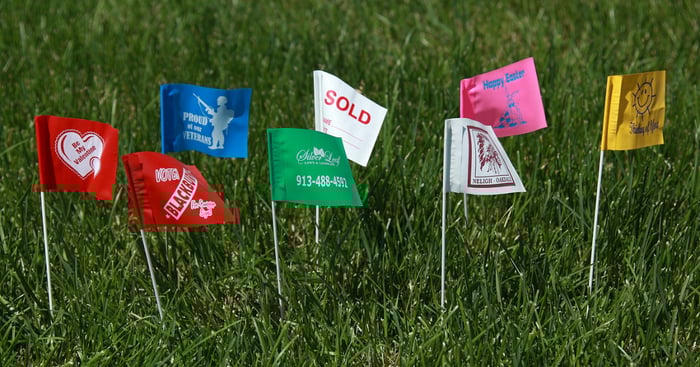
Colors and material types can vary depending on your needs.
High Gloss Poly American Flags
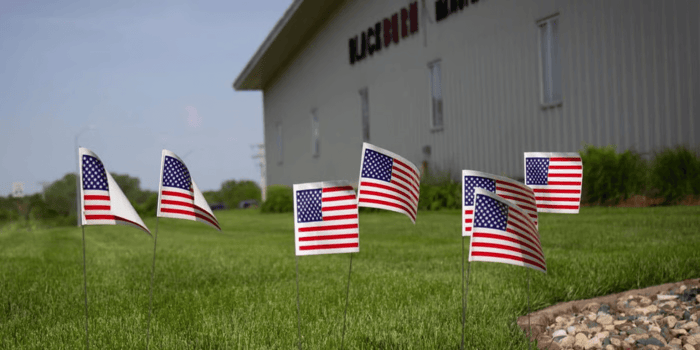
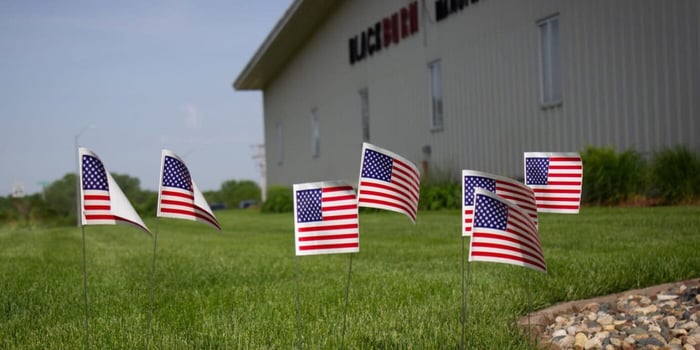
The poly American flag brings together durability and tradition. It uses tough polyethylene material that resists tearing and holds color well, even after long exposure to the elements.
These flags work well for:
Job sites that want a patriotic touch without sacrificing performance
Outdoor events that need something more durable than fabric
High-traffic events where flags need to last more than a day
They are lightweight, easy to place, and designed to keep their shape and color over time.
Plain Poly Flags
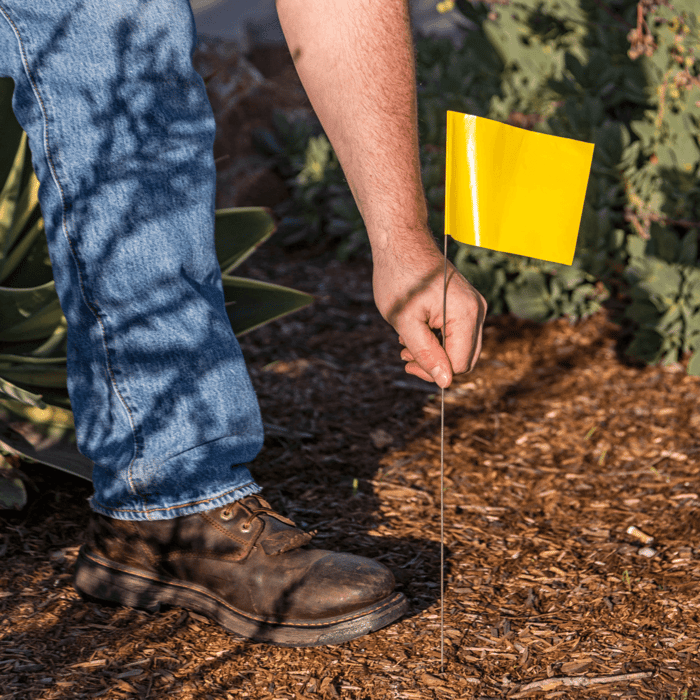
Plain poly flags are the workhorses. They offer:
Strong resistance to tearing
Bright, consistent, and high gloss color for easy visibility
Flexibility that holds up in wind and changing weather
A range of standard industry colors
These flags are ideal for utility marking, construction sites, landscaping projects, and any situation where weather and foot traffic might be intense or abundant.
Plain Vinyl Flags

Vinyl flags bring a different advantage. They are vibrant and hold their shape well, which can make them easier to spot in certain conditions.
They offer:
A more sturdy feel for consistent positioning
Strong visibility in dense or cluttered environments
A clean, structured look for organized layouts
A range of standard industry colors
Vinyl flags work well for survey marking, boundary definition, and areas where you want a more defined visual presence.
Each material has its place. The right choice depends on the environment, the duration of the project, and how much wear and tear the flags will face.
13 Ways to Use the Poly American Flag
To nod to the original 13 colonies, here are 13 ways to put the American poly flag to work. Some are practical. Some are more about showing a little pride while you get the job done.
Line the edge of a lakefront or backyard to create a clear “no-go” zone for kids during a party
Mark out food truck or vendor spots so setup runs smoothly and stays organized
Flag drop-off and pick-up lanes for large events to keep traffic moving one direction
Highlight emergency access paths that need to stay clear during festivals or job site work
Create a visible perimeter around freshly poured concrete or asphalt
Mark sprinkler heads or irrigation lines before seasonal maintenance or upgrades
Identify property corners during a home project before fencing or landscaping begins
Flag uneven terrain or tripping hazards at outdoor events
Use as visual checkpoints along a temporary walking trail or race route
Mark staging areas for equipment so crews know exactly where to load and unload
Separate pedestrian zones from active work areas on mixed-use sites
Flag snow pile boundaries in winter to protect landscaping underneath
Mark temporary utility hookups for events like generators, water, or Wi-Fi trailers
It is a simple product, but it can do a lot when used well.
Blackburn: Built for What Comes Next
The next 250 years will look very different from the last. Projects will move faster. Job sites will get more complex. Expectations will keep rising.
That puts more pressure on the basics.
Marking flags may not be the most high-tech tool on site, but they are one of the most important. They keep people aligned, prevent mistakes, and make everything else run smoother.
If you are managing job sites, planning events, or handling utility work, it is worth taking a closer look at the flags you use every day.
Explore Blackburn’s marking flag options, from poly American flags to standard poly and vinyl styles, and make sure your next project is set up for success.
FAQs
What are marking flags used for?
Marking flags identify underground utilities, construction zones, survey points, and safety boundaries. They help crews avoid hazards and stay aligned.
Are marking flags color coded?
Yes. Standard colors represent different utilities and uses, such as red for electric and yellow for gas.
What makes poly American flags different from standard flags?
Poly American flags combine the American flag design with durable poly material, making them suitable for both display and functional outdoor use.
Can marking flags be reused?
It depends on the condition. Durable materials like poly can last longer, but flags should be replaced if they fade, tear, or lose visibility.
Are marking flags suitable for events?
Yes. They work well for traffic direction, crowd management, and temporary layouts at events.