US Dollar
From Catalog to Click: The Evolution of Blackburn Manufacturing
TLDR: Blackburn Manufacturing started with a simple idea in 1953: make a better marking flag. Over the decades, the company evolved from mailed catalogs and manual processes to a modern ecommerce experience with digital systems behind the scenes. Through every change, one thing stayed consistent: a focus on quality, reliability, and long-term customer relationships.
At a Glance:
A single innovation in marking flags from E.A. “Bud” Blackburn sparked a business that continues to grow more than 70 years later.
Printed catalogs, calendars, and personal connections helped build part of Blackburn’s loyal customer base, which still fuels the business today.
As demand increased, Blackburn expanded its product line, added customization through printing, and transitioned from manual workflows to more efficient digital systems, including new websites.
Blackburn blends decades of American manufacturing experience with ecommerce, making it easy for customers to find, customize, and order products without losing the human touch.
Every business has an origin story. For Blackburn Manufacturing, it started with a practical problem and a smart solution.
In 1953, founder E.A. “Bud” Blackburn, an engineer by trade, received a simple request from his cousin in the surveying industry. The tools they were using to mark locations weren’t efficient. They needed something better.
Bud got to work and engineered a machine that could attach a flag to a wire staff, creating one of the earliest versions of what we now know as marking flags.
That one idea didn’t stay small for long.
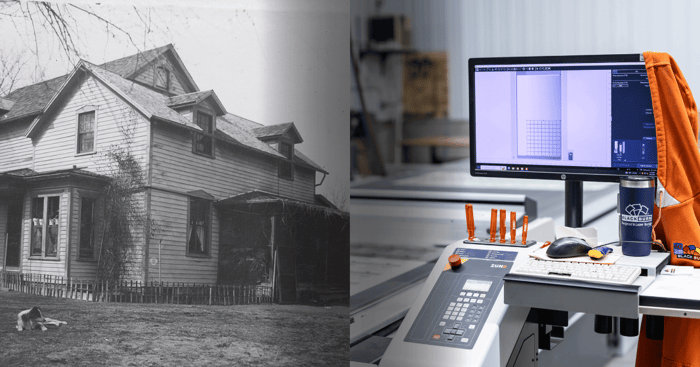
In the company’s first year, Bud, his father, and his two young sons ran a single machine around the clock to fulfill an order of one million flags. What started in a basement in Nebraska quickly turned into something much bigger.
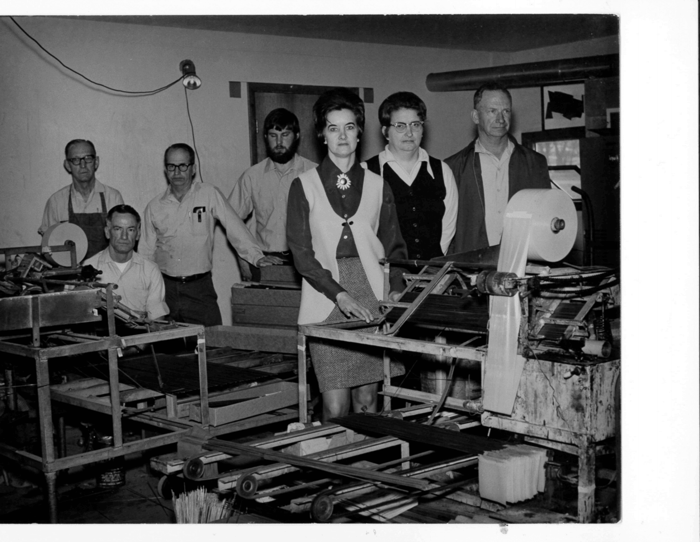
Over the decades, Blackburn expanded beyond its original marker flags product into a full range of marking solutions, from field essentials to printed materials and signage.
Through it all, the company has remained a family owned business, built on the same principles that define strong American manufacturing: ingenuity, hard work, and long-term relationships.
A lot has changed since 1953, including the way customers discover products, the way they place orders, and the speed at which business operates.
Here’s a look at how the company evolved into what it is today.
The Catalog Era: When Orders Came by Mail
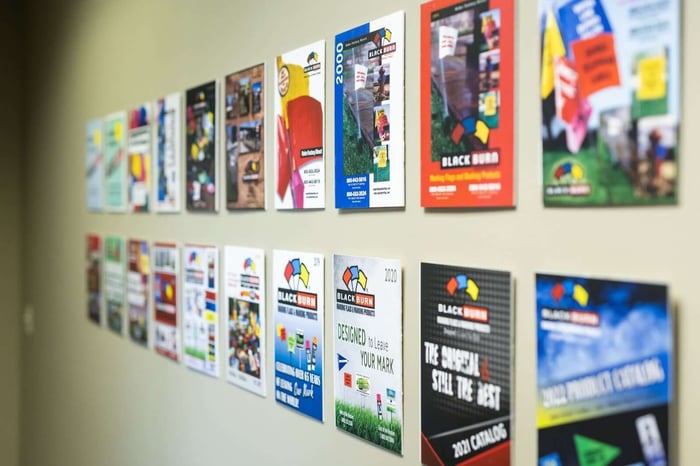
Before ecommerce, Blackburn relied on a tool that feels almost nostalgic now: the printed catalog.
Each year, customers received a catalog packed with product listings, specifications, and ordering information. It served as both a reference guide and a connection point between Blackburn and its customers.
Blackburn also sent out a branded calendar. They were practical, simple, and surprisingly effective. Many customers kept them on their walls year-round. They became part of the daily workspace as a constant reminder of where to go when supplies ran low.
Ordering required a bit more effort back then. Customers flipped through pages, made selections, and placed orders by phone or mail. It took more time, but it also created strong personal relationships. Customers often spoke directly with someone they knew at Blackburn.
This approach worked for years. It supported steady growth and helped the company build a loyal customer base across industries that depend on reliable marking tools.
But the buying process didn’t stay the same forever.
The First Ecommerce Website: A New Way to Order
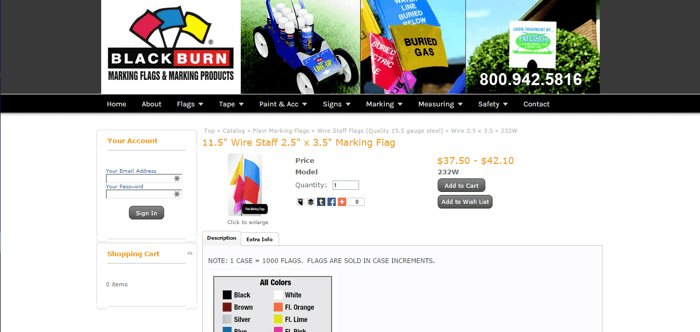
As the internet began reshaping how businesses operated, Blackburn knew it needed to evolve. Around 2015, the company marked its entry into ecommerce for manufacturers.
For customers, the shift felt significant.
Instead of flipping through catalogs, they could now browse products online, explore options, and place custom orders whenever it was convenient. It made sourcing materials faster and more flexible, especially for teams managing and ordering from active job sites.
The new website also expanded access. It introduced Blackburn to a broader audience and made it easier for existing customers to reorder products they relied on.
While the front end changed, the internal process told a different story.
Behind the Scenes: A Manual Operation
Early ecommerce at Blackburn didn’t rely on automation. Orders came in digitally, but fulfillment still ran on manual systems. Team members processed orders by hand, moving them through a structured workflow that resembled an assembly line.
It required coordination, attention to detail, and a lot of communication, especially for custom orders.
Requests for custom marking signs, branded flags, and other specialized products meant additional steps. The team handled each one carefully to ensure accuracy.
Nothing about the process felt automated. And yet, it worked. The same mindset that powered the company in its early days (when a single machine ran nonstop to meet demand) still showed up in how orders moved through the system.
Technology helped bring customers in, but the people made sure they stayed.
However, as more customers found Blackburn online through its expanded investment in marketing and the website, that system started to feel the pressure of growth.
A Shift to Smarter Systems
As order volume increased from having an ecommerce presence, Blackburn knew the manual process couldn’t scale forever.
Over time, Blackburn introduced more digital systems across its operations, bringing greater efficiency and visibility to every stage of the process. Orders no longer rely on pen and paper to move forward. Instead, integrated systems help route jobs, track progress, and reduce the risk of delays or errors.
Alongside these operational improvements, Blackburn continued to refine its ecommerce experience through another website redesign, making it easier for customers to navigate, search, and order with confidence.
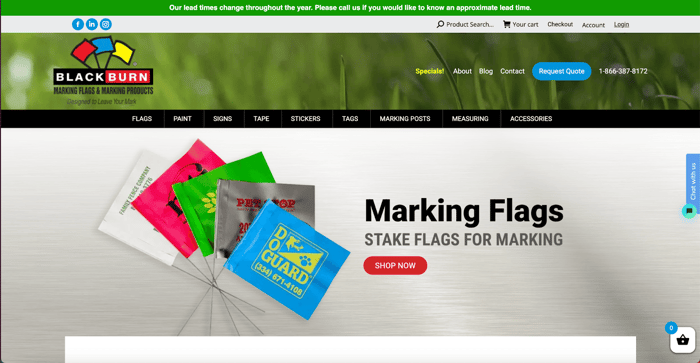
That shift made a real difference. Faster processing means customers get what they need sooner, and better tracking gives the team clearer insight into timelines, inventory, and production flow.
Growth Over the Years
What started with a single product evolved into a broad lineup of solutions used across construction, utilities, landscaping, and beyond. The company introduced more customization options, expanded its capabilities, and invested in new ways to serve customers.
Printing became a major turning point.
Back in the 1970s, Blackburn responded to competitive pressure by launching its own printing subsidiary. That decision opened the door to customization, and that advantage still matters today.
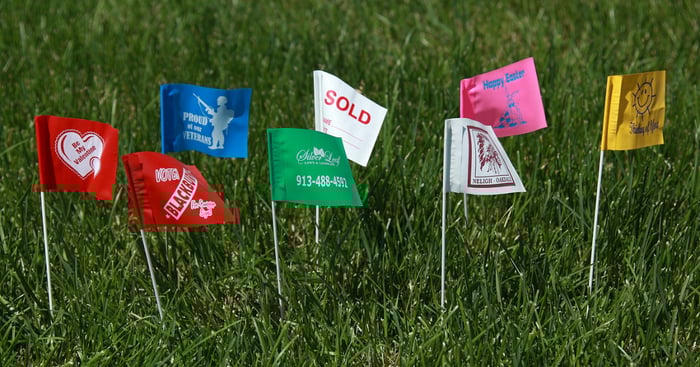
With modern digital press printing, customers can create highly specific products tailored to their needs, from custom flagging tape to branded field flags to custom corrugated plastic signs.
By the Numbers
The numbers tell part of the story.
By 1971, the company had already produced more than 20 million flags. By 2002, that number had grown to over 190 million annually. In 2022, Blackburn hit a major milestone: its 6 billionth flag sold.
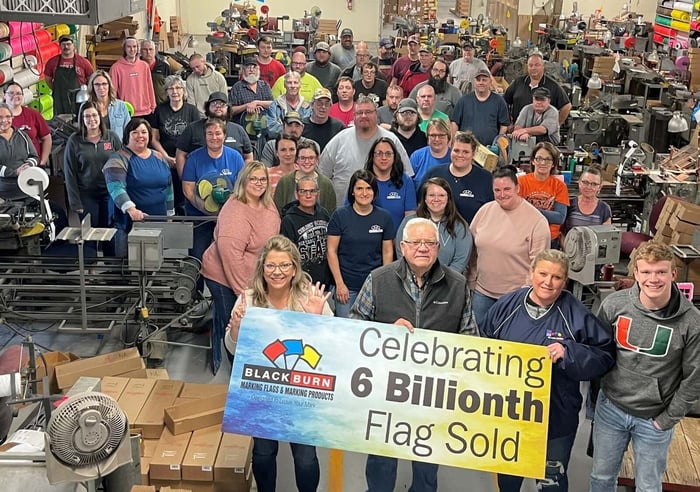
And the momentum hasn’t slowed.
In 2025, Blackburn manufactured over 175 million vinyl flags along with hundreds of thousands of fiberglass and poly flags, coroplast yard signs, and millions of marking signs used across job sites nationwide.
The reach has grown just as much as the volume.
Blackburn now serves customers in all 50 states and 51 countries, supporting more than 70 industries, with especially strong roots in utility, surveying, and green sectors. And perhaps most telling of all: more than 26,000 customers have been ordering from Blackburn for over a decade.
Blackburn is a strong example of how American manufacturing companies can evolve: blending decades of experience with modern ecommerce manufacturing strategies.
But the growth brought a new challenge. The website that helped fuel that expansion needed to catch up with the business itself.
2026: The Time for a New Website

Over time, Blackburn’s product offering became more complex.
What started with a single product line grew into hundreds of SKUs across multiple categories, each with its own variations, use cases, and customization options. The website that once supported that growth began to feel the strain. Products were harder to find, navigation required more digging, and customers often had to know exactly what they were looking for to get where they needed to go.
As the catalog expanded, so did the need to organize it in a way that reflected how customers actually shop. Contractors, utility crews, and purchasing teams don’t think in terms of internal product groupings. They think in terms of application, job type, and outcome. The previous site didn’t always align with that mindset.
The new website was built to change that.
Instead of simply listing products, the updated structure groups them more intentionally. Categories are clearer. Navigation is more intuitive. Products are organized in a way that helps customers move from a general need to a specific solution without friction.
That shift shows up immediately in the menu. What was once a disorganized and confusing navigation experience is now a more strategic hierarchy. Explore the menu and notice defined categories and subcategories that guide users deeper without overwhelming them.
Behind the scenes, this reorganization also creates a stronger foundation for growth. As new products are introduced, they now have a clear place within the structure. The site can scale without becoming harder to use.
It’s a simple idea, but a critical one: as Blackburn evolved, the website needed to evolve with it. Not just to keep up, but to make the buying process easier for every customer who depends on Blackburn to get the job done.
Looking Ahead
The move from catalog to ecommerce didn’t happen overnight, and it’s not finished.
Blackburn continues to invest in better systems, improved processes, and new ways to serve its customers. The updated website marks an important step, but it’s part of a much bigger trajectory.
The company remains focused on what has always worked:
Building products that hold up in the field
Delivering orders customers can count on to remain efficient and grow their brands
Strengthening relationships that last
Ready to see what Blackburn can do for your next project? Browse our full lineup of products or connect with our team to find the right solution for your needs.
FAQs
What are marking flags used for?
Marking flags are used to clearly mark locations on job sites. Contractors, surveyors, landscapers, and utility crews use them to identify underground utilities, boundaries, hazards, and project layout points.
Can Blackburn produce custom marking flags?
Yes. Blackburn offers custom marking flags that can include printed text, branding, or project information. These flags help teams quickly communicate important details directly on the job site.
What is digital press printing?
Digital press printing is a modern printing method that allows manufacturers to quickly produce customized products with high-quality graphics and text. Blackburn uses digital press technology to create customized marking products and custom marketing materials.
Is Blackburn an American manufacturer?
Yes. Blackburn Manufacturing Co. is a family-owned and operated American manufacturing company.
Does Blackburn sell products online?
Yes. Blackburn operates an ecommerce website that allows customers to browse and purchase products online. The company continues to expand its capabilities to make ordering easier and faster for customers.
Do larger Blackburn orders qualify for freight discounts?
Yes. Orders weighing 125 lbs. or more qualify for multi-weight freight discounts, allowing Blackburn to reduce overall shipping costs and pass those savings directly on to customers.